Bringing home a newborn is beautiful, emotional, exhausting, and sometimes overwhelming—all at the same time.
Most new parents expect to be tired. What often surprises them is how deeply ongoing sleep deprivation can affect everyday life.
Interrupted sleep can influence your mood, patience, memory, concentration, physical recovery, and ability to cope with the demands of caring for a newborn.
During the postpartum period, rest is not a luxury.
It is part of recovery.
Newborn Sleep Is Different From Adult Sleep
Newborns naturally wake frequently.
They need to eat often, be changed, comforted, burped, and helped back to sleep. That means parents may only get sleep in short stretches throughout the night.
Even if you technically spend eight hours in bed, repeatedly waking every hour or two can leave you feeling as though you barely slept at all.
After several nights—or several weeks—of interrupted sleep, exhaustion can begin to build.
Sleep Deprivation Can Make Emotions Feel Bigger
Have you ever noticed that everything feels harder when you are tired?
Small problems can suddenly feel enormous.
You may become more irritable with your partner.
You might cry more easily.
You may feel impatient, overwhelmed, frustrated, or unusually sensitive.
That does not necessarily mean you are doing anything wrong as a parent.
Sometimes your body and brain are simply exhausted.
The emotional adjustment to parenthood is significant on its own. When that adjustment is combined with physical recovery, hormonal changes, feeding demands, and chronic sleep disruption, it can become especially difficult.
What About Postpartum Brain Fog?
Many new parents describe feeling forgetful or mentally scattered during the newborn stage.
You may walk into a room and forget why you went there.
You may lose your phone while holding it.
You might wonder whether you already changed the baby, washed the bottles, or took your medication.
This can feel frustrating, but remember how much your brain is managing.
Feedings.
Diapers.
Sleep schedules.
Pumping.
Bottle washing.
Appointments.
Laundry.
Visitors.
Recovery.
Your baby’s cues.
Your own needs.
And all of this while functioning on broken sleep.
That mental load can feel incredibly heavy.
Sometimes one of the most helpful things you can do is simplify your expectations.
Write things down. Accept help. Let some household tasks wait.
And when possible, protect your sleep.
Sleep and Postpartum Mental Health
Sleep and emotional well-being are closely connected.
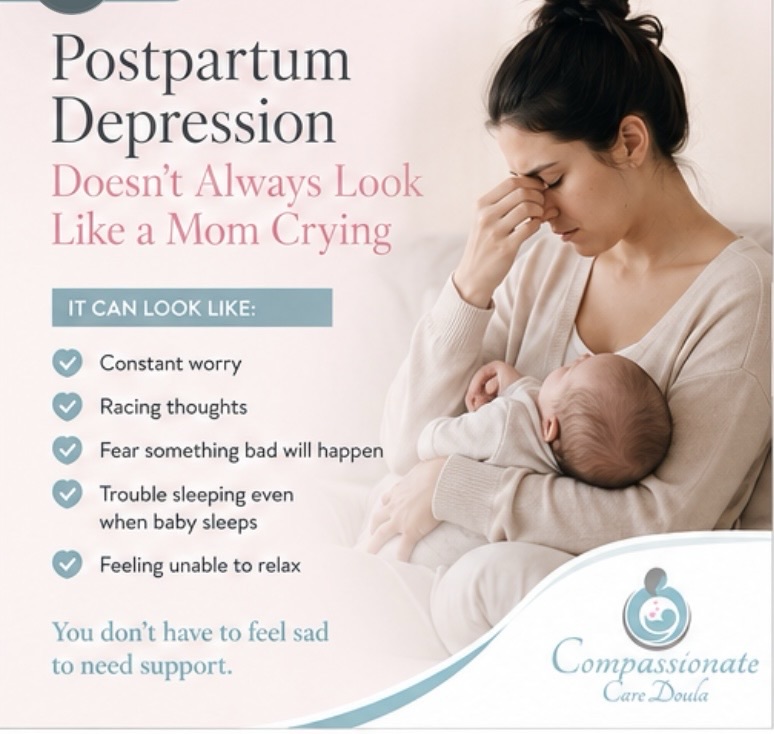
Ongoing sleep deprivation can make anxiety, excessive worrying, irritability, and feelings of overwhelm feel more intense.
This is one of the reasons postpartum care should focus on the parent as well as the baby.
If you notice that anxiety, sadness, intrusive or frightening thoughts, hopelessness, or feelings of overwhelm are becoming persistent or difficult to manage, please speak with your healthcare provider.
Asking for help is part of taking care of yourself.
You Do Not Have to Earn Rest
New parents sometimes feel guilty sleeping while someone else cares for their baby.
But rest does not mean you are less involved.
It does not mean you are missing something.
And it certainly does not mean you are failing.
Your body has gone through an enormous transition.
Your baby needs care—but so do you.
Support might come from your partner taking a feeding, a family member helping during the afternoon, a friend bringing dinner, or professional postpartum support overnight.
The goal is not for you to do everything yourself.
The goal is for your family to be supported.
How Can an Overnight Postpartum Doula Help?
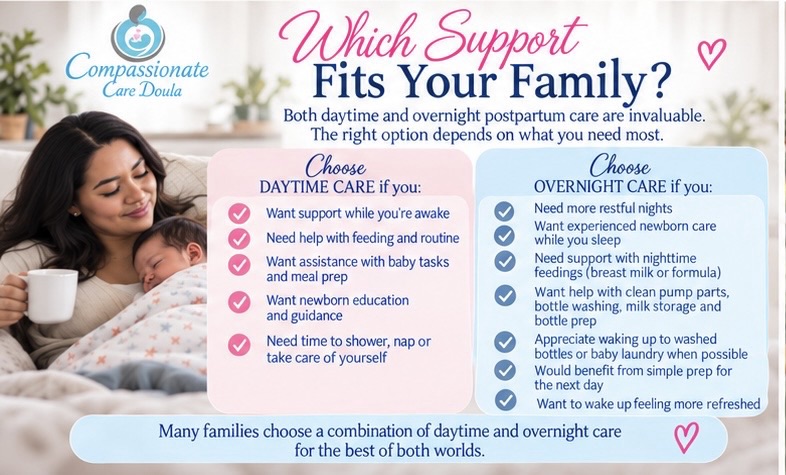
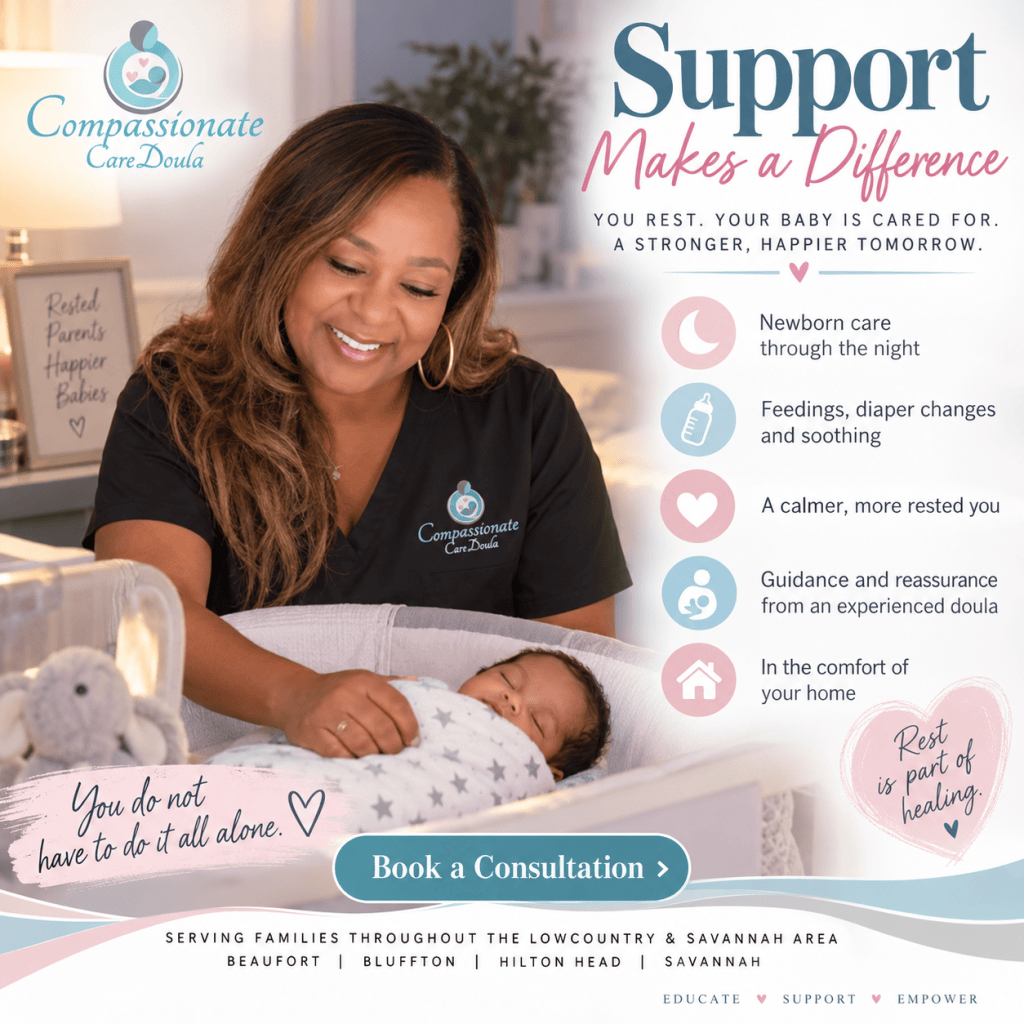
One of the greatest benefits of overnight postpartum care is giving parents the opportunity to get longer stretches of restorative sleep while knowing their newborn is being cared for nearby.
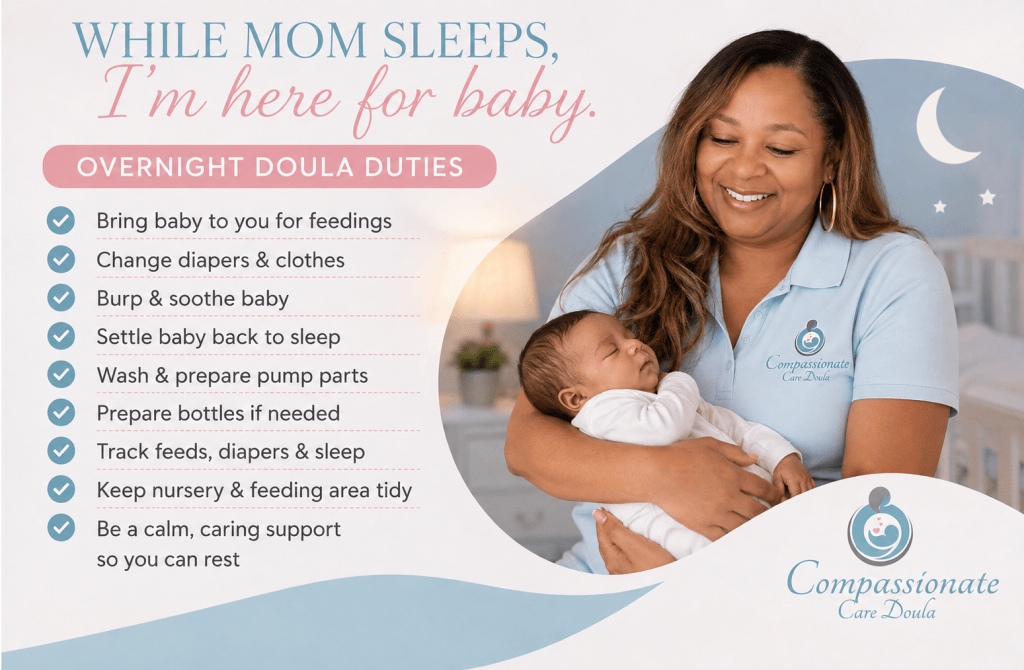
Depending on your family’s needs, overnight postpartum support may include:
- Newborn soothing and settling
- Bottle feeding
- Bringing baby to you for breastfeeding
- Diaper changes
- Burping and comforting
- Washing bottles and pump parts
- Tracking nighttime feeds and diapers
- Newborn care education
- Gentle sleep-support foundations
- Emotional reassurance for new parents
Sometimes simply knowing that someone experienced is awake with your baby allows your body to finally relax.
That peace of mind matters.
Rest Is Part of Healing
Postpartum recovery is about more than physical healing.
It is about creating an environment where a new parent has enough support to recover, learn their baby, and adjust to their new role.
You do not need to wait until you are completely exhausted before asking for help.
You do not have to prove that you can handle everything yourself.
And you do not have to earn rest.
Caring for the baby also means caring for the parent.
If you are preparing for your baby or already in the newborn stage and could benefit from overnight postpartum support, Compassionate Care Doula Services provides personalized postpartum and newborn care for families throughout Beaufort, Bluffton, Hilton Head, the South Carolina Lowcountry, and Savannah.
Ready to get more rest and feel more supported?
Book a consultation to learn how overnight postpartum care can support your family during the fourth trimester.


























Leave a Reply