When Birth Trauma Follows You Home: Understanding Postpartum PTSD
Bringing home a new baby is often portrayed as a joyful beginning. But for some mothers, the birth experience follows them home in ways no one prepared them for.
They may feel grateful that their baby is safe while also experiencing fear, anger, grief or unwanted memories of what happened. These feelings are not mutually exclusive. A mother can deeply love her baby and still struggle with the emotional effects of childbirth.
A recent report on childbirth-related post-traumatic stress disorder reinforces an important message: postpartum mental-health support should not end at hospital discharge—or at the traditional six-week visit.
What Is Childbirth-Related PTSD?
Childbirth-related post-traumatic stress disorder can develop after a person experiences childbirth as frightening, dangerous, overwhelming or deeply distressing.
The experience does not need to look traumatic to other people. A mother may have felt ignored, powerless, inadequately informed or terrified that she or her baby was going to die. Emergency procedures, severe pain, hemorrhage, an unplanned cesarean birth, separation from the baby or a newborn’s admission to intensive care may also contribute to trauma.
Not every difficult birth results in PTSD, and only a qualified healthcare or mental-health professional can make a diagnosis. However, persistent symptoms should not be dismissed as something every new mother experiences.
Possible symptoms can include:
- Unwanted memories, flashbacks or nightmares about the birth
- Avoiding conversations, medical appointments or reminders
- Feeling constantly alert or easily startled
- Intense anxiety, panic, anger or irritability
- Emotional numbness or disconnection
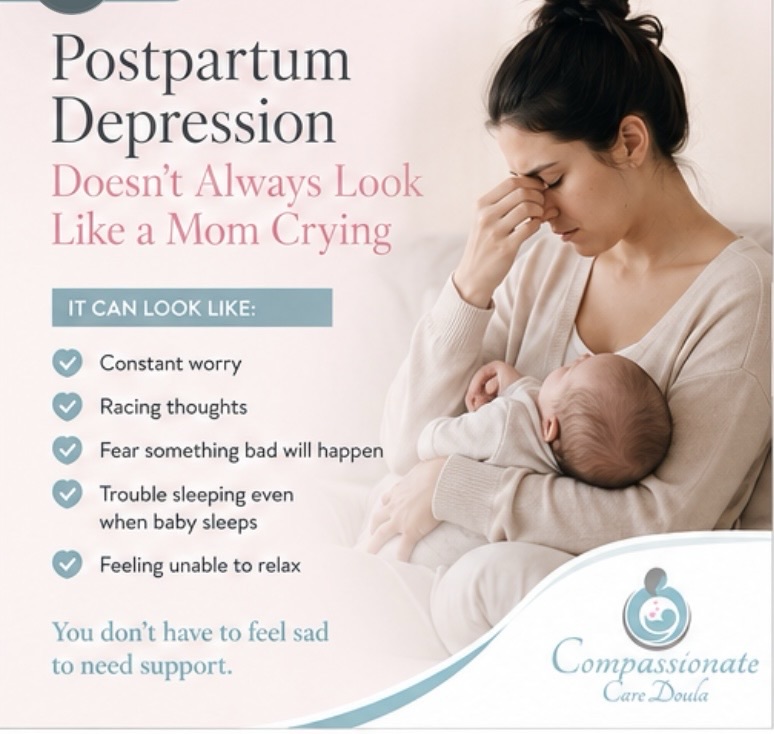
- Difficulty sleeping even when there is an opportunity to rest
- Guilt, shame or self-blame
- Distress when thinking about another pregnancy or birth
Symptoms may begin soon after delivery or become more noticeable later, especially when immediate physical recovery slows down and the family has less outside support.
The Effects Can Continue Beyond Six Weeks
A 2026 report from the UK’s MAP Alliance examined the economic and personal effects of postnatal PTSD. The report drew upon research following more than 2,000 women from pregnancy through two years postpartum.
Women experiencing childbirth-related PTSD had healthcare and support-service costs approximately 2.5 times those of women without PTSD symptoms between six and twelve months after birth. Only 53% of women with PTSD had returned to work by twelve months, compared with 68% of women without symptoms.
Perhaps most concerning, more than half of the women experiencing PTSD received no mental-health referral.
Because this research was conducted within the UK healthcare system, its financial estimates should not be directly applied to American families. Nevertheless, the larger message is highly relevant: childbirth-related trauma can affect health, relationships, employment and family life well beyond the early postpartum period.
Recovery does not follow a six-week timeline.
Why Symptoms May Be Missed
The weeks after birth are exhausting, and some symptoms can be mistaken for ordinary new-parent adjustment.
A mother may be told that every new parent is anxious, tired or emotional. She may hesitate to speak because her baby is healthy and she believes she should simply be grateful. She may also worry that discussing her thoughts will cause others to judge her parenting.
Families and professionals may focus almost entirely on the baby while asking very little about how the mother is functioning emotionally.
Statements such as “At least the baby is healthy” can unintentionally deepen isolation. A healthier response might be:
“I am grateful you and the baby are here, and I also understand that what happened was frightening. You deserve support.”
What Trauma-Informed Postpartum Support Looks Like
Trauma-informed care recognizes that control, trust, choice and emotional safety may be especially important after a distressing birth.
In the home, that can mean:
- Asking permission before touching personal belongings or assisting with care
- Explaining what will happen before beginning a task
- Respecting feeding and newborn-care decisions
- Offering choices instead of issuing commands
- Listening without forcing the parent to retell the birth story
- Avoiding judgmental language
- Helping reduce household demands so the parent can rest
- Encouraging professional help when symptoms are persistent or concerning
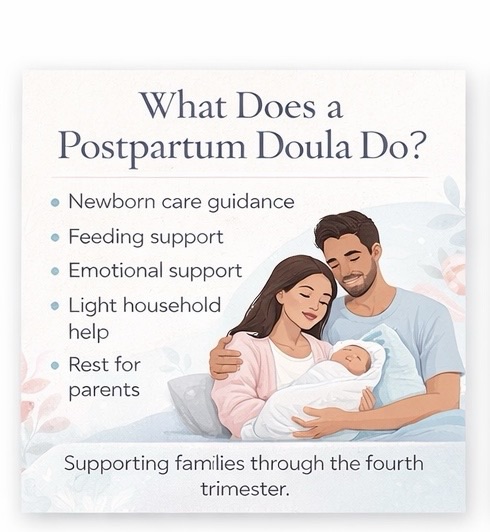
A postpartum doula does not diagnose or provide mental-health treatment. However, a doula can offer consistent, nonjudgmental support, recognize when something may be outside the normal range of adjustment and help families connect with qualified professionals.
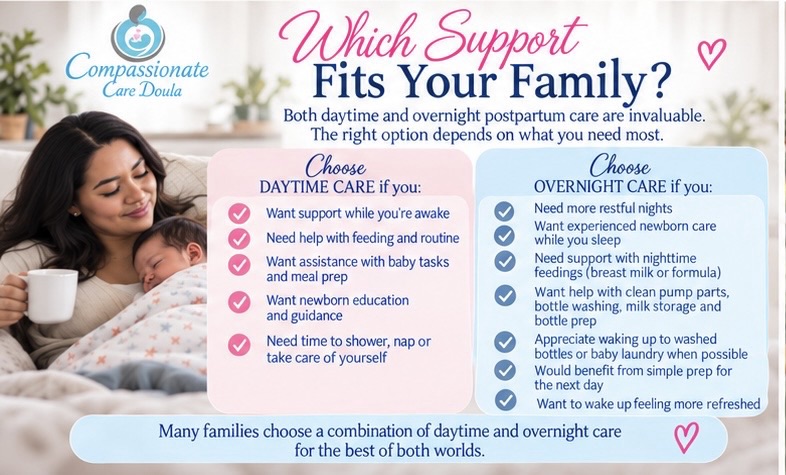
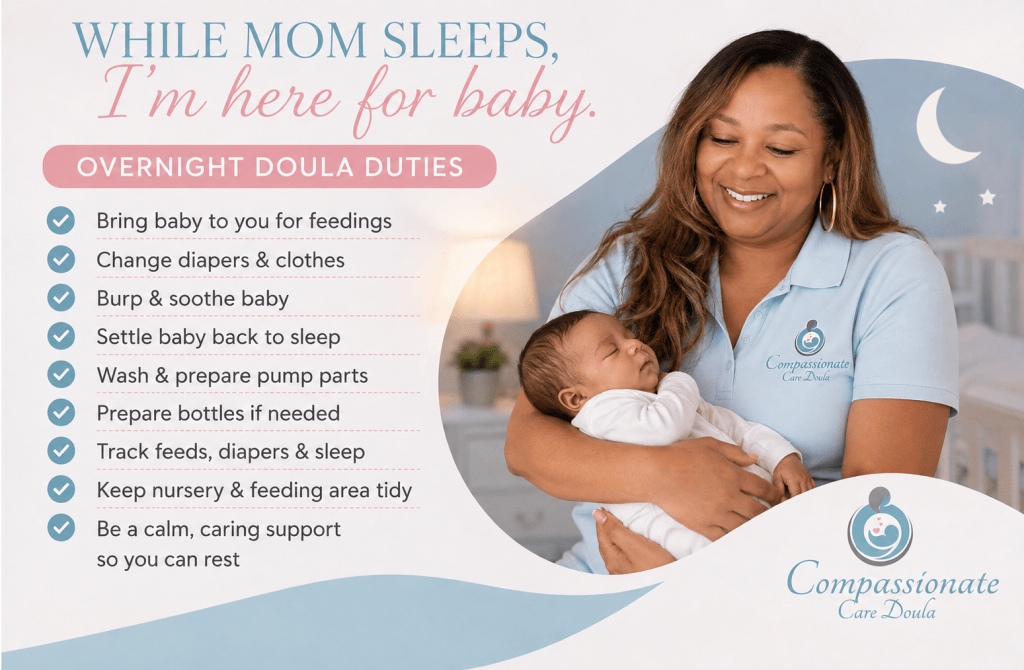
Overnight postpartum care can also reduce some of the practical burdens surrounding newborn care. It cannot treat PTSD, but dependable support, opportunities for rest and a calmer home environment can form part of a broader professional care plan.
How Partners and Families Can Help
Loved ones do not need to have perfect words. They can begin by listening and believing the person who gave birth.
Helpful statements include:
- “I believe you.”
- “You did not deserve to feel unheard or unsafe.”
- “You do not have to handle this alone.”
- “Would you like me to help you contact your provider?”
- “What would help you feel safer or more supported today?”
Avoid pressuring someone to focus only on the positive, retell the story before they are ready or compare their experience with another person’s birth.
Practical help also matters. Preparing meals, caring for the baby while the mother attends an appointment, managing visitors and protecting opportunities for rest can make professional treatment easier to access.
When and Where to Seek Help
Contact an obstetrician, midwife, primary-care provider or licensed perinatal mental-health professional if symptoms are interfering with sleep, relationships, newborn care, medical appointments or daily functioning.
Postpartum Support International offers information, peer support and connections to specialized resources:
- PSI HelpLine: 1-800-944-4773
- National Maternal Mental Health Hotline: 1-833-852-6262
- Call or text 988 during a mental-health crisis
- Call 911 when there is immediate danger
The PSI HelpLine is not an emergency service.
You Still Deserve Care
The birth may be over, but the need for care may not be.
A mother should never be expected to suffer silently because her baby appears healthy or because several weeks have passed. Emotional recovery is part of postpartum recovery, and asking for help is an act of strength.
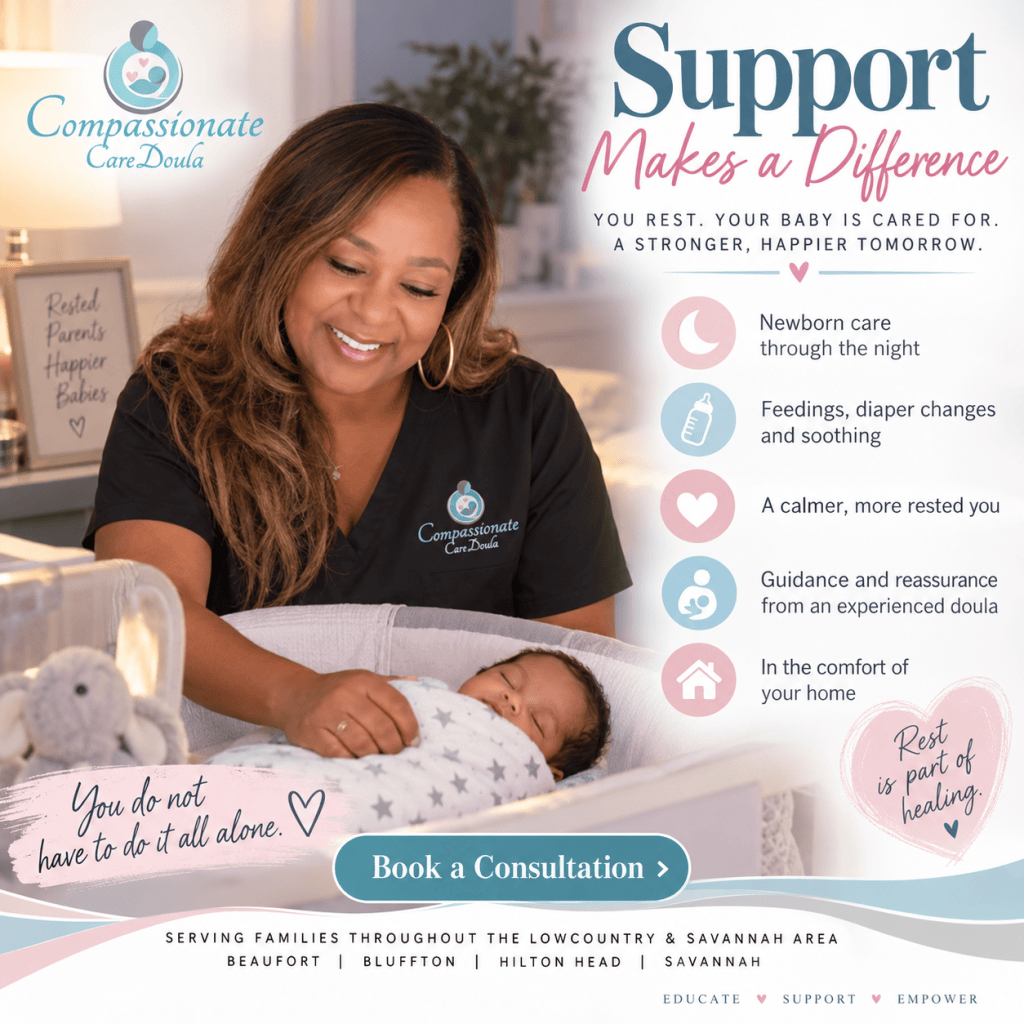
Compassionate Care Doula Services offers gentle, judgment-free postpartum and newborn support for families in Beaufort, Bluffton, Hilton Head, the South Carolina Lowcountry and Savannah.
To learn more or schedule a consultation, visit CompassionateCareDoula.com.
Sources: MAP Alliance, “Counting the Cost of Birth Trauma”; American College of Obstetricians and Gynecologists; Postpartum Support International.




















Leave a Reply