Keeping Your Baby Healthy While Protecting Your Peace of Mind
Bringing home a newborn is one of the most exciting and emotional experiences for a family. Those first weeks are filled with cuddles, feedings, sleepless nights, and learning all about your new little person.
But when your newborn arrives during cold and flu season, it’s completely understandable to feel a little more protective.
Between the common cold, influenza, RSV, and other respiratory illnesses, many new parents wonder:
How do I keep my baby healthy without feeling like I need to keep everyone away?
As a Certified Postpartum Doula, I often remind families that protecting your newborn doesn’t have to mean living in fear. A little education, preparation, and a few healthy boundaries can go a long way.
Let’s talk about what you should know.
1. Why Cold and Flu Season Matters for Newborns
A newborn’s immune system is still developing. While babies receive some protection from their mothers during pregnancy and, when breastfed, through breast milk, they are still vulnerable to infections.
Illnesses that may cause mild symptoms in adults can sometimes be more serious for newborns.
Three common concerns during respiratory illness season include:
- The common cold: Often causes congestion, sneezing, coughing, and feeding difficulties.
- Influenza (the flu): Can cause fever, coughing, fatigue, and potentially serious complications in young infants.
- RSV (Respiratory Syncytial Virus): A common respiratory virus that can lead to bronchiolitis or pneumonia, particularly in very young babies.
Not every cough or stuffy nose means your baby is seriously ill. However, recognizing symptoms early and knowing when to contact your pediatrician is important.
2. Please Don’t Kiss My Baby! Setting Healthy Boundaries
Let’s talk about something that can sometimes be uncomfortable for new parents: visitors.
Everyone is excited to meet your little one. Grandparents, friends, siblings, and extended family members naturally want to hold, kiss, and cuddle the newest family member.
But during cold and flu season, it’s perfectly reasonable to establish a few guidelines.
Here are some boundaries I encourage families to consider:
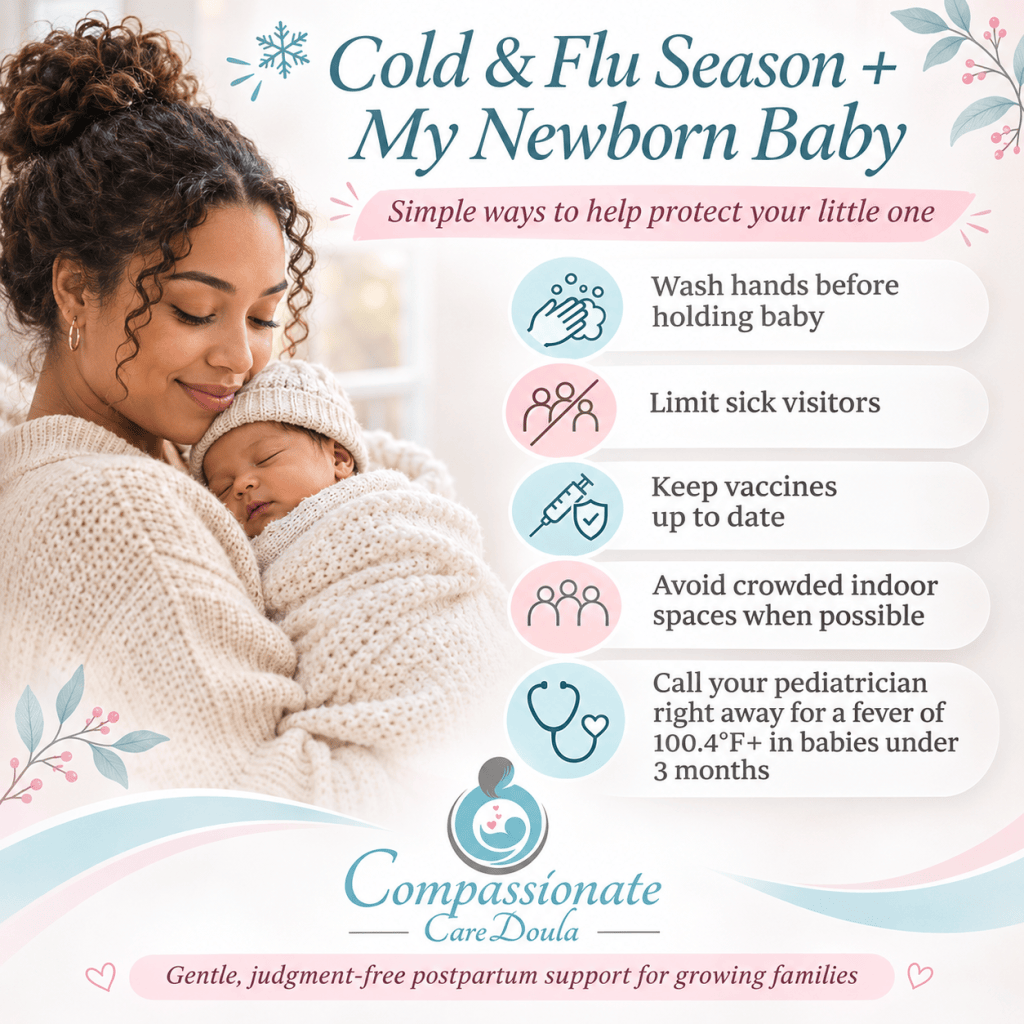
- Wash your hands before holding the baby.
- If you’re feeling sick, please postpone your visit.
- Avoid kissing the baby’s face or hands.
- Keep visits short, especially during those first few weeks.
- Respect the parents’ preferences regarding visitors.
You don’t owe anyone an explanation for wanting to keep your baby healthy.
And partners, this is an excellent opportunity to step in and help communicate those boundaries.
New mothers are recovering physically and emotionally from childbirth. They shouldn’t have to manage everyone’s feelings while also adjusting to caring for a newborn.
Healthy boundaries aren’t about keeping loved ones away. They’re about keeping your baby protected.
3. RSV, the Flu, or Just a Cold? What Should Parents Watch For?
Newborns can’t tell us when they’re not feeling well, so recognizing changes in their normal behavior is especially important.
Some symptoms to watch for include:
- Nasal congestion or coughing
- Feeding less frequently or taking smaller amounts than usual
- Unusual fussiness or decreased activity
- Faster breathing or increased effort to breathe
- Fewer wet diapers
- Fever
RSV in very young infants may not cause a fever, so don’t rely on temperature alone to determine whether your baby is sick.
When Should You Contact Your Pediatrician?
If your baby is younger than three months and develops a rectal temperature of 100.4°F (38°C) or higher, seek immediate medical evaluation, even if your baby otherwise seems comfortable.
If your baby experiences difficulty breathing, blue or gray lips, significant pauses in breathing, or is difficult to awaken, seek emergency medical care.
For a newborn who is feeding poorly, producing fewer wet diapers, coughing, or acting unusually, contact your pediatrician promptly.
Parents should also discuss recommended immunizations and RSV protection with their baby’s healthcare provider.
Depending on the mother’s vaccination history and the baby’s eligibility, protection against severe RSV illness may be available through vaccination during pregnancy or preventive antibodies given to the infant.
Remember, there is never anything wrong with calling your pediatrician when something doesn’t seem right.
4. What Happens If Mom Gets Sick?
Here’s something we don’t always talk about enough.
What happens when the mother gets sick?
You’re recovering from childbirth, feeding your newborn around the clock, adjusting to interrupted sleep, and now you’re dealing with a cold or the flu.
First, please remember that you deserve care, too.
If you’re breastfeeding, you can generally continue breastfeeding while sick with common respiratory viruses.
Breast milk contains antibodies and other immune-supporting components, and continuing to breastfeed can provide valuable benefits to your baby.
A few precautions can help reduce the chance of spreading illness:
- Wash your hands before feeding or handling your baby.
- Wear a well-fitting mask when you’re sick and must be close to your newborn.
- Clean frequently touched surfaces.
- Ask your partner or another healthy caregiver to help with baby care.
- Stay hydrated and make rest a priority.
- Ask your healthcare provider about safe medications and treatment options.
Never place a mask on a baby under two years old.
And remember, you don’t have to do everything yourself.
Allowing someone else to change diapers, prepare meals, handle laundry, or soothe the baby while you rest is not a weakness.
It’s part of a healthy postpartum recovery.
5. How an Overnight Postpartum Doula Can Help During Cold & Flu Season
Those first several weeks with a newborn can be exhausting, especially when your household is trying to navigate cold and flu season.
Sleep deprivation, frequent nighttime feedings, and the responsibilities of caring for a newborn can leave parents feeling overwhelmed.
This is where professional postpartum support can make a meaningful difference.
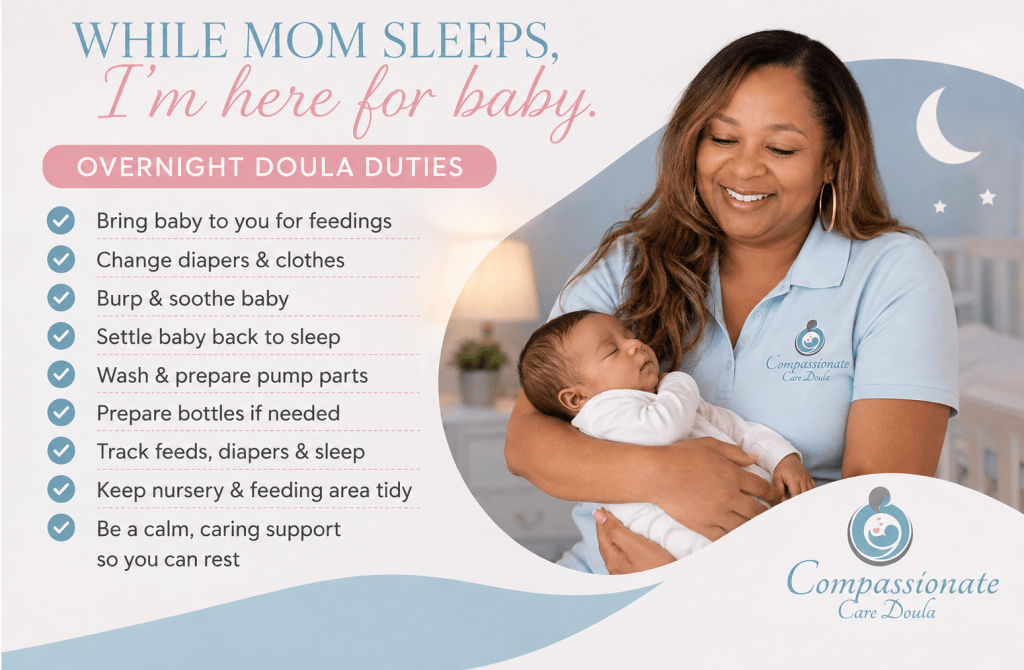
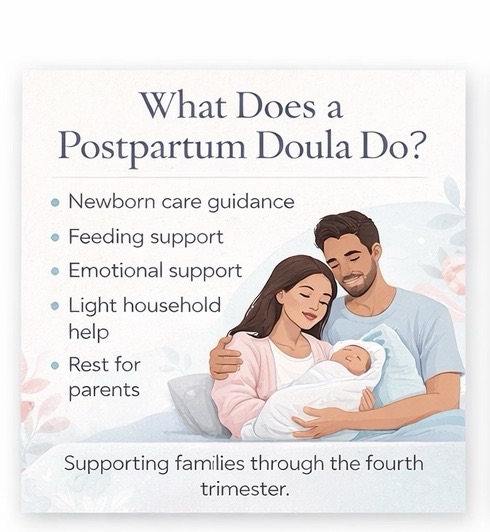
As an Overnight Postpartum Doula, my role is to support your newborn’s care while helping you get the rest you need.
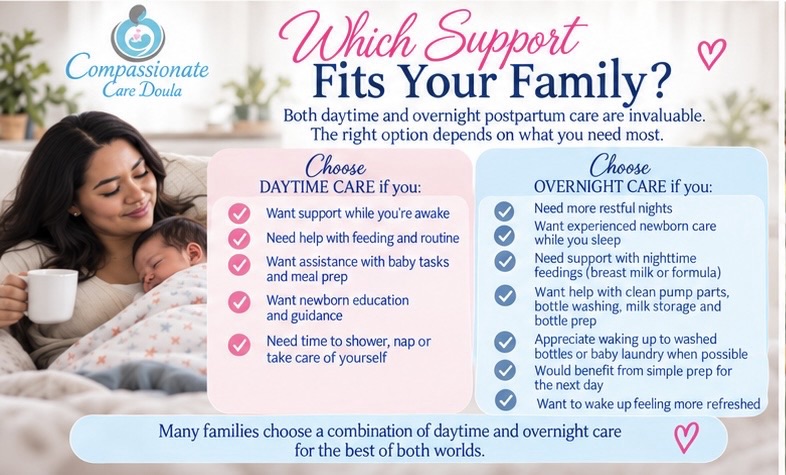
Depending on your family’s needs, overnight support may include:
Feeding support: Helping with bottle feedings using expressed breast milk or formula, and supporting breastfeeding parents between feedings.
Bottle and pump care: Washing and sanitizing bottles and pump parts according to recommended guidelines.
Milk storage and preparation: Preparing bottles and safely handling expressed breast milk or formula.
Newborn care: Diaper changes, soothing, settling, and following safe sleep practices.
Light newborn-related household tasks: Helping maintain a clean, organized space for your baby’s care.
Parental rest: Allowing parents to have longer opportunities for rest between necessary feedings and newborn care responsibilities.
I also follow appropriate hygiene and illness precautions when working with families.
Of course, an overnight doula cannot prevent every illness, and when a family member or caregiver is sick, additional precautions may be necessary.
But having compassionate, knowledgeable support can make those challenging early weeks feel much more manageable.
6. You Can Protect Your Baby Without Living in Fear
As a postpartum professional, one of the messages I want new parents to hear is this:
You do not have to be afraid of every cough, sneeze, or visitor.
You simply need to be informed, prepared, and comfortable advocating for your newborn.
Wash your hands. Establish healthy boundaries. Stay current on recommended immunizations. Know the warning signs of illness.
And don’t forget to take care of yourself along the way.
The newborn stage is about so much more than surviving sleepless nights and worrying about germs.
It’s about bonding, recovering, building confidence, and enjoying your growing family.
You deserve to experience those moments with reassurance, education, and support.
Compassionate Care for Your Growing Family
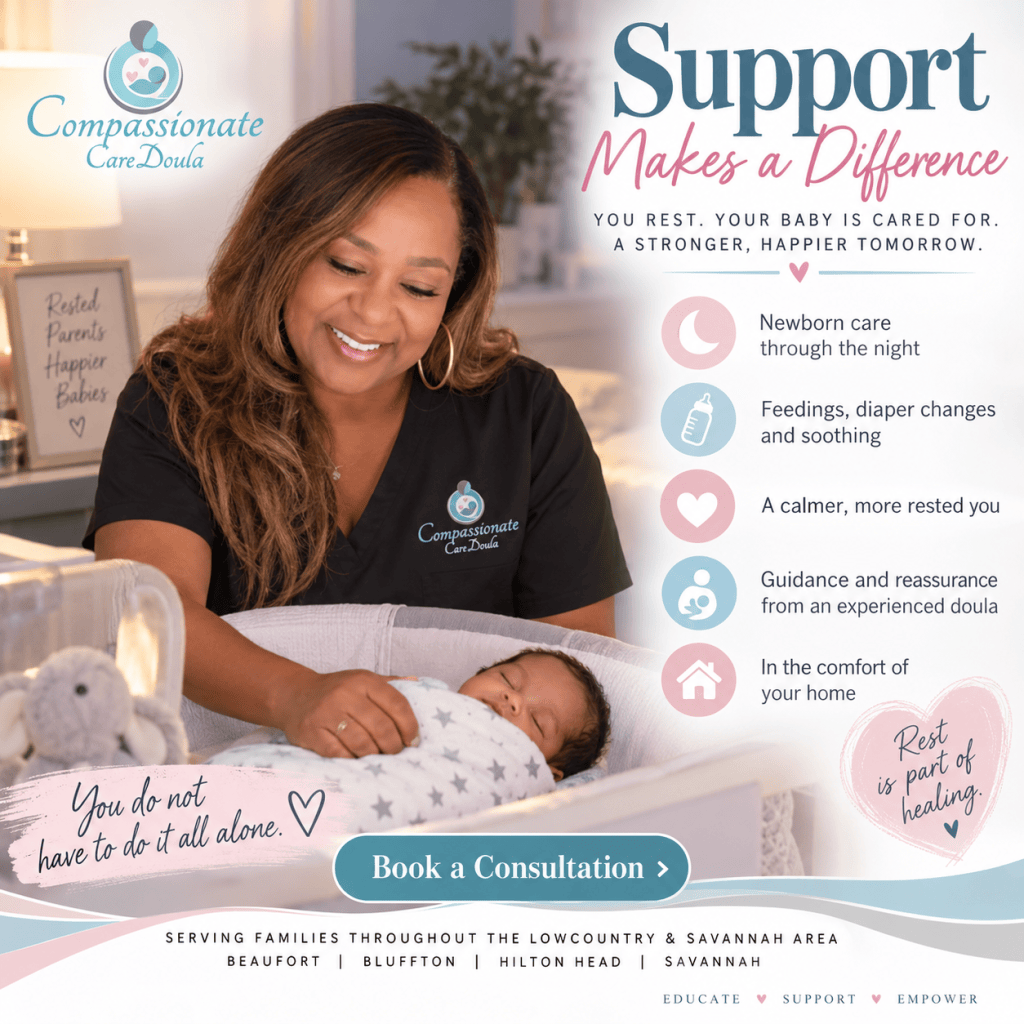
At Compassionate Care Doula Services, LLC, I provide personalized postpartum and overnight newborn care to help families navigate the fourth trimester with confidence.
Whether you need assistance with newborn care, feeding support, postpartum recovery, or simply an opportunity for more rest, I’m here to provide compassionate, judgment-free support tailored to your family’s needs.
Proudly serving families throughout Beaufort, Bluffton, Hilton Head Island, Hardeeville, Savannah, and surrounding Lowcountry communities.
Compassionate Care Doula Services, LLC
Supporting parents. Nurturing newborns. Encouraging confident beginnings.
🌐 compassionatecaredoula.com
Medical note: This information is intended for parent education and is not a substitute for individualized medical advice. Always consult your pediatrician regarding your newborn’s symptoms and medical care.
Parent Education Resources
- Centers for Disease Control and Prevention (CDC): RSV in Infants and Young Children
- CDC: Immunizations to Protect Infants
- American Academy of Pediatrics, HealthyChildren.org: Fever and Your Baby




















Leave a Reply