If you’re a new parent, few things cause faster anxiety than seeing redness in your baby’s diaper area.
Is it normal?
Is it yeast?
Did I do something wrong?
Take a breath.
Diaper rashes are incredibly common during the newborn months. Most are mild and resolve quickly with simple adjustments. The key is understanding what you’re looking at — and when to escalate care.
As a postpartum doula serving families in Beaufort, Bluffton, Hilton Head, and throughout the Lowcountry, I walk parents through this concern often.
Let’s break it down.
What a “Normal” Diaper Rash Looks Like
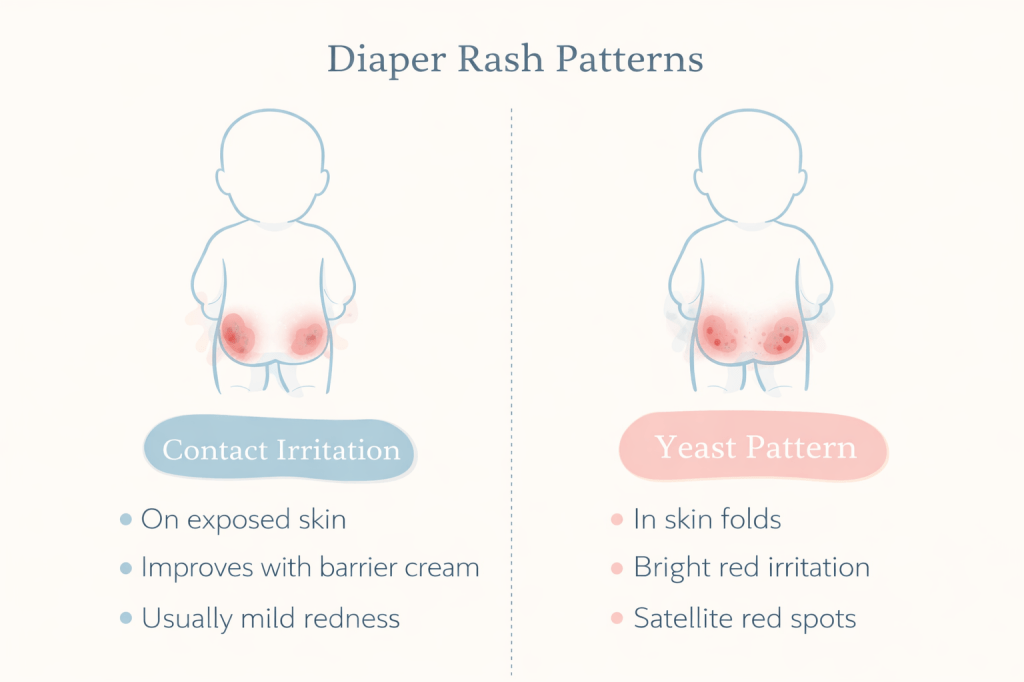
A typical contact diaper rash:
• Appears on the exposed areas of the bottom
• Looks pink or mildly red
• Does not involve deep skin folds
• Improves within 1–3 days with barrier cream
• Baby may be slightly fussy during changes, but otherwise comfortable
This type of rash is usually caused by moisture and friction.
Even high-quality diapers can trap warmth. Newborn skin is thin and sensitive — it doesn’t take much irritation.
Common Causes of Diaper Rash
Understanding the cause helps prevent recurrence.
1. Moisture
Prolonged wetness softens the skin and makes it more prone to breakdown.
2. Friction
Wipes, tight diapers, or rubbing during cleaning.
3. Stool Acidity
This one surprises many parents.
Changes in:
• Breastmilk composition
• Formula
• Starting solids
• Antibiotics
can make stool more acidic and irritating.
4. Antibiotics
These can disrupt normal skin flora and increase yeast risk.
5. Sensitive Skin
Some babies simply have more reactive skin.
None of these mean you’re doing anything wrong.
How to Treat Mild Diaper Rash
The goal is protection and dryness — not over-treating.
Here’s a gentle approach:
• Change diapers frequently
• Pat dry — do not rub
• Allow short periods of air exposure
• Use a thick zinc oxide barrier cream
• Use warm water and soft cloth instead of wipes if skin is irritated
Avoid:
• Essential oils
• Scented products
• Constant product switching
Often, simplicity works best.
Yeast Rash vs. Contact Rash: Know the Difference
If a rash:
• Is bright red
• Extends into skin folds
• Has small “satellite” red spots
• Does not improve after 2–3 days
• Occurs after antibiotics
It may be yeast.
Yeast rashes typically require antifungal treatment from your pediatrician.
If you’re unsure, it’s always appropriate to send a photo through your pediatrician’s portal or schedule an evaluation.
You’re not overreacting. You’re being observant.
When to Call the Pediatrician
Seek guidance if you notice:
• Open sores
• Blisters
• Fever
• Spreading rash
• No improvement after several days
• Significant pain during diaper changes
Most diaper rashes are manageable at home — but persistent rashes deserve evaluation.
Prevention: The Quiet Power of Small Details
Prevention is often simpler than treatment.
• Change diapers promptly
• Use high-absorbency overnight diapers
• Apply a thin barrier layer before bedtime
• Keep wipes gentle and fragrance-free
• Ensure the diaper fits properly
In my overnight postpartum work with families across the Lowcountry, I often see how small nighttime adjustments prevent skin breakdown before it starts.
Detail-oriented care matters.
Final Reassurance
Not every red bottom is an emergency.
Most diaper rashes are a normal part of early infancy — especially during feeding transitions or growth spurts.
If you’re feeling unsure, overwhelmed, or just want reassurance, you’re not alone. These small concerns can feel big when you’re exhausted.
Support makes a difference.
If you’re preparing for life with a newborn and want guidance that feels calm, evidence-based, and personalized, I offer postpartum support throughout Beaufort, Bluffton, Hilton Head, and surrounding Lowcountry communities.
You don’t have to figure it out alone.




















 Compassionate Care Doula Services, LLC
Leave a comment