By Dawn Oliver, Certified Postpartum Doula
Compassionate Care Doula Services, LLC
As a new parent, you spend a lot of time watching your baby sleep, play, and snuggle. You want to do everything right — and that includes supporting their growing body and brain. One common concern many parents face in the first few months is the development of a flat spot on the back or side of their baby’s head.
The good news? There are gentle, simple ways to help prevent this — and I’m here to walk you through them with care and clarity.
💗 What Is a Flat Spot? (Positional Plagiocephaly)
A flat spot is medically known as positional plagiocephaly. It occurs when a baby’s soft, still-developing skull becomes flattened from repeated pressure on one area — usually from spending a lot of time lying in the same position.
Flat spots are common, especially in babies under 6 months old who are still learning to move and lift their heads. While they can be concerning to see, they’re usually preventable — and very often treatable — with early awareness and small daily adjustments.
🔄 What Causes Flat Spots?
Flat spots are caused by repeated pressure on one area of the skull, often due to:
Sleeping in the same position (especially on the back) Extended time in baby gear (swings, bouncers, car seats) Limited tummy time or upright holding A baby’s natural preference to look one direction Medical conditions like torticollis (tight neck muscles)
🌿 Gentle Ways to Help Prevent Flat Spots
These everyday practices can make a big difference in protecting your baby’s head shape — no pressure or perfection required!
1️⃣ Start Tummy Time Early
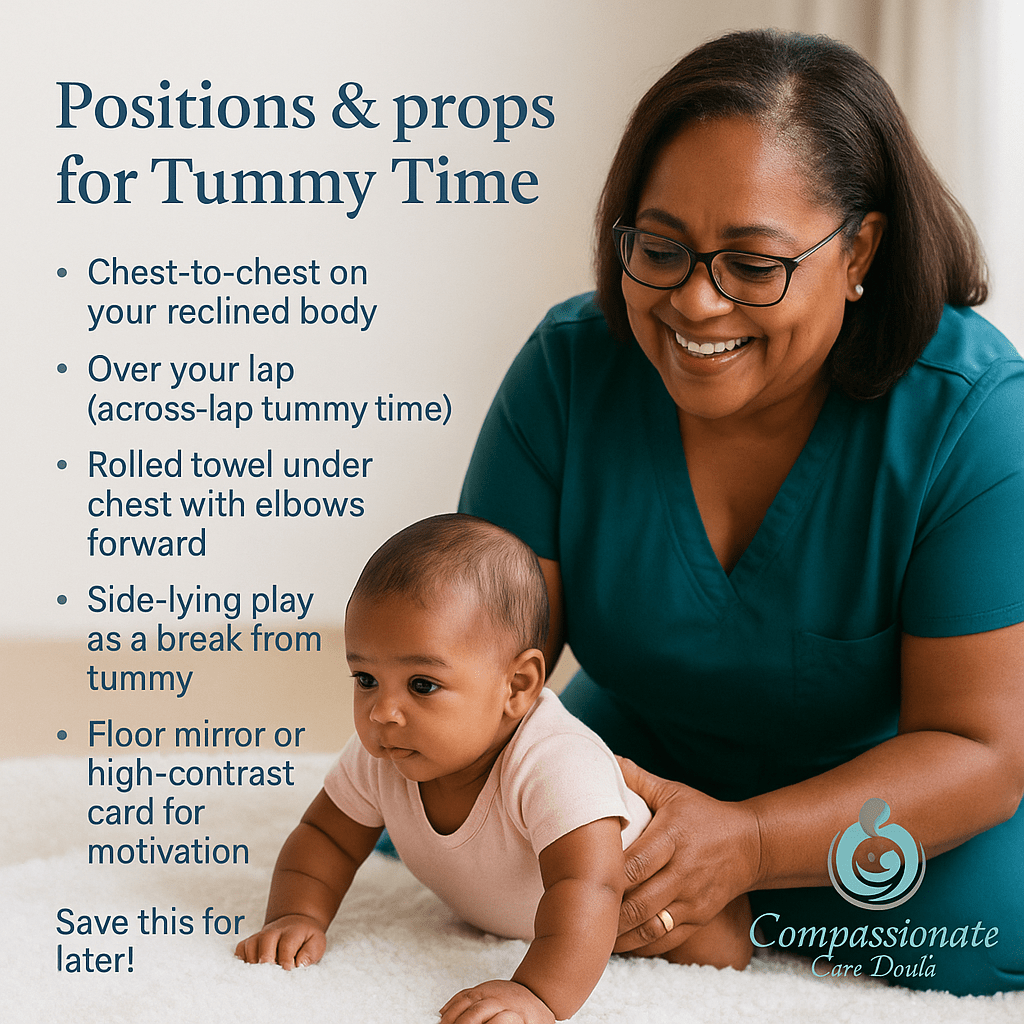
Begin as soon as baby comes home, for a few minutes at a time. Work up to several sessions a day. This helps strengthen neck and shoulder muscles and gives the back of their head a break.
2️⃣ Switch Up Positions
Alternate which side you hold baby on, or which way they face during diaper changes and feedings. In the crib, occasionally rotate baby’s sleeping direction (head on opposite ends), so they naturally turn different ways to look out.
3️⃣ Use Upright Time to Your Advantage
Practice safe babywearing or hold baby upright more often during wake windows. Less time lying flat means less pressure on one spot.
4️⃣ Create Engaging Play Areas
Place toys or mirrors on alternating sides during floor play to encourage head movement. Offer supervised side-lying play, which also helps with motor development.
🛠️ Helpful Tools (When Used Mindfully)
Towel rolls or positioners for supervised play (never for sleep!) Flat-head-friendly mattresses or mats (must meet safe sleep standards) Soft structured carriers for hands-free upright bonding Play gyms with overhead or side toys to promote turning both directions
📣 When to Reach Out for Support
If your baby strongly favors one head position, or if you notice a flat spot that’s not improving, it’s always okay to check in with:
Your pediatrician A pediatric physical therapist (especially if torticollis is suspected) Or connect with a postpartum doula for hands-on guidance
Early intervention leads to the best outcomes — and there’s absolutely no shame in getting help.
🤱 A Doula’s Role in Baby’s Healthy Development
As a postpartum doula, I provide more than just newborn care. I help parents:
Understand daily routines that support head, neck, and body development Feel confident in babywearing and tummy time Stay encouraged when things feel overwhelming Learn through gentle, hands-on support that’s never judgmental
💬 Final Thoughts
Flat spots aren’t your fault. They’re common, and they’re preventable with small, intentional habits over time.
The more you know, the more empowered you are to protect your baby’s development — one cuddle, one reposition, one tummy time session at a time.
You’re already doing an amazing job.
—
Want more tips like this or support during the fourth trimester?
Visit CompassionateCareDoula.com or follow along on Instagram and Facebook.




















 Compassionate Care Doula Services, LLC
Leave a comment